
Flange Encapsulation and Valve Corrosion Protection
Valves, flanges, bolt clusters and small fittings are the details a paint system cannot reach. Film thickness cannot be controlled around a bolt head, crevices between mating faces stay wet, and buried valve chambers fill with rainwater or groundwater — so the assembly spends part of its life submerged. Corrosion concentrates exactly where the asset is operated and where seizure is most expensive.
Match the build-up to the connection and access
Fill the profile
Matching mastic or paste fills bolt recesses and abrupt section changes so tape does not bridge empty spaces. Record flange diameter, bolt projection and adjacent fittings.
Select the barrier
Petrolatum systems use the matching primer and profiling material. Viscoelastic tape and paste follow their primer-free application route. Choose by temperature, exposure and the maintenance plan.
Keep the asset operable
Define wrap terminations around moving stems, inspection points and identification plates. Select outer protection for buried, sunlit or immersed conditions and plan access for inspection and reinstatement.

Valves, Flanges and Buried Fittings
Valves, flanges, bolt clusters and small fittings are the details a paint system cannot reach. Film thickness cannot be controlled around a bolt head, crevices between mating faces stay wet, and buried valve chambers fill with rainwater or groundwater — so the assembly spends part of its life submerged. Corrosion concentrates exactly where the asset is operated and where seizure is most expensive.
Corrosion risk
- Crevice corrosion between flange faces, under bolt heads and inside chamber penetrations.
- Standing water in valve chambers, alternating with drying cycles.
- Loss of coating film thickness on edges, threads and sharp geometry.
- Seized stems and fasteners, making planned operation and isolation impossible.
Recommended configuration
Matching primer for the petrolatum route, or the primer-free viscoelastic route → compatible paste or mastic pressed into recesses → the selected tape around the fixed assembly at the specified overlap. Keep moving stems and required inspection points accessible. Nothing cures and nothing is heated, so the work is done in a live chamber by ordinary site labour.
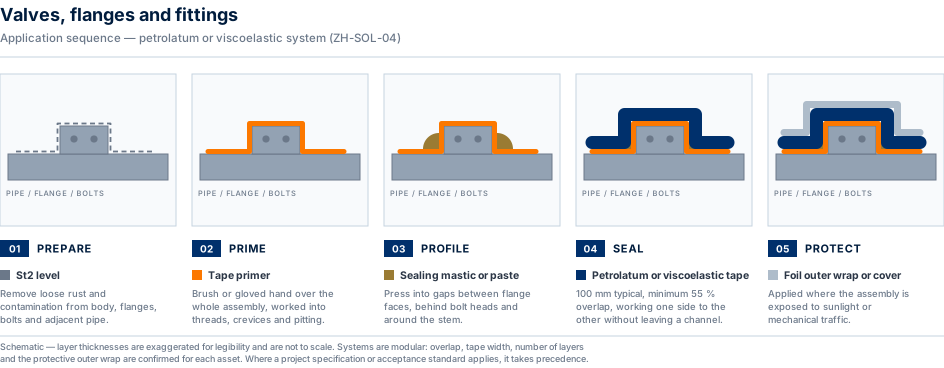
How do you protect a buried valve or flange?
A valve chamber, flange pack or bolt cluster is not a flat plate. The reliable sequence is to prepare the accessible steel, fill the voids and then wrap the complete geometry so water cannot sit behind the protection.
Why does paint fail at the detail?
Edges, threads, bolt heads and flange gaps make film thickness difficult to control. A chamber also cycles between standing water and drying, so a small holiday can become the start of crevice corrosion.
What is the wrapping sequence?
Remove loose corrosion and contamination, apply the specified primer, press mastic into recessed geometry, then complete the flange encapsulation around the bolts, flange and stem with the selected petrolatum or viscoelastic tape. Keep the overlap and void-control requirements in the project method statement.
What should a quotation include?
Send valve type, flange or bolt dimensions, chamber condition, access, operating temperature, immersion cycles and any cathodic-protection requirement. Photos of the assembly help us choose the mastic, tape grade and outer wrap.
Send a valve or flange enquiry →Send us the asset, we will propose the system
Asset type, dimensions, operating temperature, exposure and estimated quantity are enough for us to return a system configuration, a material estimate and the supporting documents.